
Top Foreign Languages to Learn Online for Working and Settling Abroad
Moving abroad isn’t some pipe dream anymore—it’s what thousands of Indians are doing every single year. But here’s the reality check nobody gives you: landing in a foreign country with just English and hoping for the best? That’s setting yourself up for a rough time.
I’ve seen this play out with my own circle. My college roommate moved to Germany three years back. Spent his first six months completely lost because he couldn’t speak German. Struggled with everything—finding an apartment, opening a bank account, even buying groceries was an ordeal. Now compare that to another friend who learned basic German before moving. He hit the ground running, made local friends within weeks, and got promoted faster because he could actually communicate with colleagues and clients.
The difference? One prepared, one didn’t. And preparation today doesn’t mean enrolling in expensive language institutes or putting your life on hold. You can learn from your bedroom in Mumbai or Bangalore, at midnight if that’s when you’re free. That’s the beauty of online learning—it bends to your life, not the other way around.
Let me walk you through the languages that actually matter if you’re serious about working and settling abroad. Not the ones that sound romantic or look good on paper, but the ones that open real doors in real countries with real opportunities.
Japanese: More Than Anime and Sushi
Japan doesn’t mess around when it comes to work opportunities for foreigners. They’re facing a population crisis—aging citizens, declining birth rates, and a desperate need for young, skilled workers. This isn’t me guessing; it’s their government’s official position.
Now, I won’t sugarcoat it—Japanese is tough. Really tough. You’ve got Hiragana for native words, Katakana for foreign words, and Kanji borrowed from Chinese. It’s like learning three different alphabets simultaneously. My brain hurt for the first two months when I tried learning it.
But here’s what nobody tells you about Japan: once you’re in and you speak the language, you’re golden. The salary packages are substantial. A software engineer in Tokyo makes significantly more than their counterpart in most Asian cities. The work culture has its quirks—yes, there’s pressure, but companies are modernizing fast. The younger Japanese companies especially are nothing like the stereotypical rigid corporate environments you hear about.
Tokyo is obviously expensive. Like, painfully expensive. But cities like Osaka, Fukuoka, and Sendai offer incredible quality of life at half the cost. The trains run on time—not approximately on time, but exactly on time. Healthcare is top-notch. And safety? You can walk anywhere at 3 AM without looking over your shoulder.
The tech sector is screaming for people. Robotics, AI, automotive technology, gaming—Japanese companies invented half the stuff we use daily, and they need people who can bridge the language gap. Even conversational Japanese puts you ahead of 95% of other foreign applicants.
When you Learn Japanese online in India, don’t get stuck in perfectionism. You don’t need to write like a poet or sound like a news anchor. You need to understand your boss, explain your ideas, and handle daily situations. That’s the goal. JLPT N3 or N2 certification helps with visa applications, but practical speaking ability is what gets you through interviews and keeps you employed.
Spanish: The Language That Keeps Giving
Spanish is wild when you think about it. One language, spoken officially in twenty different countries. That’s not just impressive—that’s strategic gold for someone planning to work abroad.
Spain itself has transformed its economy. Barcelona’s startup scene rivals Berlin’s. Madrid is becoming a tech hub. And the Spanish government actually wants skilled immigrants—they’ve created visa programs specifically targeting professionals and entrepreneurs.
Here’s what I love about Spain: they’ve figured out that life isn’t just about working yourself to death. Two-hour lunch breaks are normal. Dinner happens at 10 PM. Weekends are sacred. They work to live, not live to work. Coming from India’s hustle culture, this is genuinely refreshing.
But Spain is just one piece of the puzzle. Latin America is where Spanish really multiplies your options exponentially. Mexico City is exploding with tech opportunities. Buenos Aires has a thriving creative industry. Colombia’s emerging as a major player in IT services. Chile’s stable economy attracts international businesses.
And here’s the kicker—learning Spanish is relatively straightforward compared to other languages. The pronunciation is phonetic. If you see a word, you know how to say it. Grammar has rules that actually make sense. It’s not like French where half the letters are silent for mysterious reasons.
Cost of living in Spanish-speaking countries is generally lower than Western Europe or North America. Your money stretches further. Mexico, for instance, offers fantastic lifestyle at costs that would shock someone living in London or New York. You can live comfortably, save money, and still travel extensively.
The job market loves engineers, doctors, teachers, and digital marketers who speak Spanish. Freelancing opens up too—Latin American clients are actively looking for services, and speaking their language gives you a massive competitive advantage.
When you Learn Spanish online in India, immerse yourself in content. Spanish shows on Netflix, Spanish YouTube channels, Spanish podcasts during your commute. The language is everywhere online. Practice speaking even when it feels awkward. Nobody expects perfection; they appreciate effort.
English: Stop Assuming You’re Already Good Enough
This is going to sting for some people, but it needs saying: most Indians aren’t as good at English as they think they are. We learned it in school, we use it at work, we chat in it online. But there’s a massive difference between functional English and the professional fluency required to work abroad.
I’ve sat in interviews where qualified candidates missed opportunities because they couldn’t articulate their thoughts clearly in English. Their technical skills were solid, their experience was relevant, but communication was shaky. And in countries like the US, UK, Canada, or Australia, communication isn’t secondary—it’s primary.
Think about it. You’re going to attend meetings where critical decisions are made. You’ll present ideas to clients who need to trust your expertise. You’ll write reports, emails, and documentation that represent your company. Broken English doesn’t cut it in these scenarios.
The US remains the top destination for ambitious professionals. Silicon Valley, New York’s finance sector, Boston’s biotech industry—these places offer opportunities that literally don’t exist elsewhere. But they expect clear, confident English. Accents are fine—everyone has an accent. But grammar, vocabulary, and the ability to express complex ideas matter enormously.
Canada is probably the most welcoming country for immigrants right now. Their Express Entry system is designed to attract skilled workers, and they actually follow through. But English proficiency is mandatory for immigration points. You need IELTS or CELPIP scores, and they’re not just checking if you can order coffee—they’re assessing professional competency.
Australia pays incredibly well for skilled trades, healthcare workers, and engineers. Their quality of life is off the charts—beautiful weather, outdoor lifestyle, relaxed culture. But their visa system requires English proficiency proof. New Zealand is similar—gorgeous country, strong economy, immigrant-friendly policies, but English is non-negotiable.
The UK is tougher with Brexit and all, but opportunities still exist, especially in London’s financial sector and tech industry. Again, English proficiency isn’t just helpful—it’s required for work visas.
When you Learn English online in India, focus on practical skills over textbook rules. Yes, grammar matters, but conversational fluency matters more. Watch English content without subtitles. Listen to podcasts. Read widely—news, books, articles. Write daily, even if it’s just journaling.
Practice speaking. This is where most Indians fall short. We can read and write decently, but speaking fluently? That takes deliberate practice. Find conversation partners online, join English-speaking groups, or hire tutors for regular speaking sessions.
Business English is different from casual English. Learn email etiquette, formal writing structures, presentation skills, and meeting participation. These specific skills separate the amateurs from professionals.
French: Seriously Underrated for Career Opportunities
French gets a bad rap as the artsy language without practical value. That’s complete nonsense. French is spoken in twenty-nine countries across five continents. France is the seventh-largest economy globally. And French-speaking Canada—specifically Quebec—offers immigration pathways that are genuinely easier than English-speaking provinces.
France has problems, sure—bureaucracy can be nightmarish, and labor laws are complex. But if you’re skilled in IT, engineering, healthcare, or hospitality, French companies need you. Paris isn’t just romance and museums; it’s a major business hub. Lyon has cutting-edge biotech companies. Toulouse is the aerospace capital of Europe.
The work culture in France is something else. Thirty-five-hour work weeks aren’t suggestions—they’re protected by law. You get minimum five weeks vacation annually. Work-life balance isn’t a buzzword; it’s actual policy. Healthcare is exceptional and affordable. Public transport is reliable.
Now let’s talk about Canada’s Quebec. This is where French becomes incredibly strategic. Quebec has its own immigration system separate from federal Canada. They actively recruit French-speaking immigrants. Montreal is an amazing city—multicultural, vibrant, affordable compared to Toronto or Vancouver. If you speak French, your chances of permanent residency through Quebec’s program increase dramatically.
Don’t sleep on French-speaking Africa either. Countries like Ivory Coast, Senegal, Morocco, and Cameroon are growing economies with increasing opportunities in infrastructure, telecommunications, and education. International organizations and NGOs operating in these regions desperately need French-speaking professionals.
The French language itself is challenging. Gendered nouns are confusing—why is a table feminine but a bed masculine? Verb conjugations are complex. Pronunciation involves sounds English doesn’t have. But it’s completely learnable with consistent practice.
When you Learn French online in India, embrace the difficulty. Start with foundational grammar and basic conversation. Build vocabulary systematically. Practice pronunciation daily—French has specific sounds that need muscle memory. Watch French shows with French subtitles, not English ones. Listen to French music and podcasts.
DELF and DALF certifications are internationally recognized and required for French immigration applications. Work toward these systematically. They test all four skills—reading, writing, listening, and speaking.
One more thing about French: actually attempting to speak it, even poorly, is culturally appreciated. The French value their language deeply. Making the effort opens doors that English alone simply cannot.
German: Economic Power Meets Opportunity
Germany is fascinating right now. They’re Europe’s economic powerhouse with a massive skilled worker shortage. Their government has actively simplified visa processes for non-EU citizens. The “Blue Card” system is designed to attract qualified professionals, and unlike many countries, Germany follows through.
What does Germany need? Engineers—mechanical, electrical, software, automotive. Healthcare workers—doctors, nurses, specialists. IT professionals, researchers, tradespeople. The job market is hungry for talent, and they’re willing to pay for it.
German work culture gets stereotyped as rigid and cold. There’s some truth there—Germans value efficiency, punctuality, and direct communication. But there’s also genuine respect for work-life balance. Forty-hour work weeks are standard, not starting points. Overtime is compensated. Vacation time is generous—25-30 days annually is normal. Parental leave policies are excellent.
Living in Germany is more affordable than you’d expect. Yeah, Munich is expensive, but Berlin, Hamburg, Leipzig, and Cologne offer great quality of life without breaking the bank. Public transport is extensive and reliable. Healthcare is comprehensive and mandatory—everyone’s covered. Universities are either free or charge minimal fees, even for international students.
Austria and Switzerland also speak German. Switzerland especially offers insane salaries—we’re talking some of the highest in the world. Cost of living matches that, but you save significantly more than you would elsewhere.
Learning German has this reputation for being impossible. The grammar is genuinely complex—four cases, three genders, compound words that look like someone fell asleep on the keyboard. Separable verbs that break apart in sentences confused me for months.
But here’s the thing: German is systematic. Once you understand the logic, patterns emerge. It’s like math—complicated but consistent. English and German share roots, so many words are similar. Pronunciation is mostly straightforward—you say what you see.
When you Learn German online in India, patience is essential. Start simple. Master basic sentence structures before diving into complex grammar. Learn articles with nouns from day one—memorizing genders separately later is painful. Practice speaking despite feeling ridiculous. Germans are generally supportive of learners.
Watch German YouTube channels, listen to German podcasts, consume German content. Change your phone’s language to German. Immersion, even virtual immersion, accelerates learning dramatically.
Goethe-Institut certification is globally recognized and necessary for visa applications. Work toward A1, then A2, gradually building to B1 and B2 levels. These aren’t just certificates—they represent genuine competency levels.
Germans appreciate foreigners learning their language. While many Germans speak excellent English, especially younger people, professional environments and daily life outside major cities still require German. Learning it shows commitment and opens both career and social opportunities.
Making the Right Choice for You
So which language should you invest your time in? There’s no universal answer—it depends entirely on your specific situation, goals, and preferences.
Ask yourself honestly: Where do I actually want to live? Not where sounds cool in conversations, but where I can genuinely see myself building a life. What industry am I in, and where are the opportunities? What culture resonates with me? Because you’re not just learning a language; you’re preparing to integrate into a completely different society.
Research visa requirements thoroughly. Many countries have language proficiency as mandatory criteria. Canada needs IELTS, CELPIP, or TEF scores depending on your stream. Germany requires TestDaF or Goethe certificates for most visa types. France needs DELF/DALF for immigration. Japan recognizes JLPT for work visas. Knowing these requirements helps you set concrete targets.
Don’t choose based on difficulty alone. Yes, some languages are objectively harder than others, but every single one is learnable with consistent effort. I’ve seen people master Mandarin. I’ve watched friends become fluent in Arabic. If you’re motivated by genuine goals, difficulty becomes manageable.
Consider multiple factors together: economic opportunities in target countries, cost of living, cultural fit, language learning difficulty, and immigration pathways. Weight these according to your priorities. Someone prioritizing high salaries might choose German or Japanese. Someone wanting easier immigration might lean toward French for Quebec. Someone valuing lifestyle might prefer Spanish.
The Online Learning Revolution
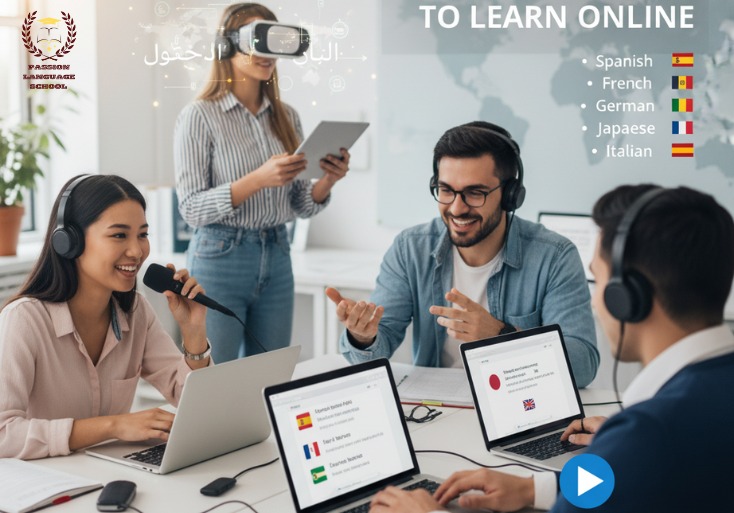
Online language learning has transformed completely in the past few years. You’re no longer limited to whatever coaching center exists in your city. You can learn from native speakers anywhere globally. Live video classes, recorded sessions for review, interactive apps, virtual language exchanges—the tools available today are incredible.
Flexibility is the biggest advantage. Working full-time? Take classes at night. Early bird? Find morning courses. Weekend learner? That works too. You control the schedule. You can pause, rewind, and replay difficult concepts until they click.
Cost is dramatically lower than traditional classroom programs. You save commuting time and money. Many quality resources are completely free—YouTube channels by native speakers, language learning podcasts, apps like Duolingo or Memrise, online forums and communities.
Technology makes practice interactive and engaging. Video calls enable face-to-face conversation practice. Apps gamify learning, making it less tedious. AI-powered tools provide instant feedback on pronunciation and grammar. Online communities connect you with fellow learners and native speakers worldwide.
Stop Waiting, Start Learning
Here’s the brutal truth: you’ll never feel completely ready. There’s always another excuse—not enough time, not enough money, not confident enough, will start next month. Meanwhile, months turn into years, and you’re still stuck in the same place.
Start imperfectly. Pick a language that aligns with your goals. Find a decent online course—it doesn’t have to be perfect. Commit to thirty minutes daily. That’s it. Just thirty minutes of focused practice every single day.
Consistency beats intensity every time. Studying for five hours once a week is less effective than thirty minutes daily. Your brain needs regular exposure to build neural pathways. Daily practice, even brief practice, compounds into real progress.
Join communities immediately. Find Facebook groups, Reddit communities, Discord servers for your target language. Practice with native speakers through language exchange apps like HelloTalk or Tandem. Watch content in that language, even if you understand only twenty percent initially. Comprehension improves faster than you’d expect.
Be kind to yourself. Language learning isn’t linear. Some days you’ll feel brilliant, other days like you’ve forgotten everything. That’s completely normal. Plateaus happen. Frustration happens. What separates successful learners from quitters is simply showing up consistently through the rough patches.
Track your progress tangibly. Record yourself speaking monthly and compare. Take practice tests to see improvement. Celebrate small wins—finishing Hiragana, holding your first basic conversation, understanding a song without subtitles. These milestones matter.
Your Future Starts Today
Every single person currently living abroad successfully started exactly where you are right now—at the beginning, uncertain, probably a little scared, but willing to try.
The world genuinely is more accessible than ever. Countries need skilled workers. Immigration policies are evolving to attract talent. Remote work has proven that physical location matters less than competency. And you have the ability, right now, sitting wherever you are in India, to prepare yourself for these opportunities.
Think about where you want to be five years from now. Same job, same city, same routine? Or exploring new opportunities, experiencing different cultures, building an international career? The difference between these two futures is the actions you take today.
Learning a language is hard work. Nobody’s going to lie to you about that. But hard work toward a meaningful goal is infinitely better than comfortable stagnation. And unlike most challenging things in life, language learning has clear pathways, abundant resources, and guaranteed results if you put in consistent effort.
So here’s my challenge to you: stop researching and start doing. Pick your language. Enroll in a course this week. Take your first class. Speak your first awkward sentences. Make your first mistakes. Begin the journey.
A year from now, you’ll either be significantly closer to your dream of working abroad, or you’ll be sitting here reading similar articles, wishing you’d started today. The choice, as always, is entirely yours. But if you’re serious about building a life abroad, about expanding your opportunities, about experiencing the world beyond India, then choosing to Learn German online in India or any other language that fits your goals is the first real step toward making it happen.
Your international future isn’t going to wait around forever. Opportunities exist right now for people who are prepared to seize them. The only question remaining is: will you be one of those people?


